NEWS PROVIDED BY
PackeTalk Technologies
September 2026
Packetalk Technologies – Sept. 2026 — Local law enforcement and public safety agencies planning technology investments have a timely federal funding opportunity to consider.
FY2026 Local JAG funding is now available through the U.S. Department of Justice’s Bureau of Justice Assistance (BJA), with eligible program areas that include technology improvements, public safety unmanned aircraft systems (UAS), and authorized counter-UAS systems.
For agencies evaluating drone detection, mobile surveillance, video technology, public safety networking, or other technology improvements, the FY2026 JAG program provides an opportunity to determine whether planned projects can be supported through an existing local allocation.
What Is the JAG Program?
The Edward Byrne Memorial Justice Assistance Grant (JAG) Program is a major source of federal criminal justice funding for state and local jurisdictions.
Unlike a traditional competitive grant, Local JAG is a formula-based program. Eligible jurisdictions receive predetermined allocations based on the federal JAG formula.
For FY2026, BJA has published local allocations by state, allowing agencies to determine whether their jurisdiction is eligible for a direct award and the amount allocated.
JAG funding can support a broad range of criminal justice and public safety initiatives, including law enforcement programs, planning and evaluation, technology improvements, information systems, equipment, contractual support, training, and technical assistance.
For agencies considering technology investments, the first step should be to determine whether their jurisdiction has an FY2026 Local JAG allocation and then evaluate the requirements applicable to the proposed project.
UAS and Counter-UAS Are Specifically Identified
One of the particularly relevant aspects of the JAG program is its treatment of unmanned aircraft systems.
JAG identifies programs to purchase and operate unmanned aircraft systems to benefit public safety as an eligible program area. The program also addresses authorized counter-UAS systems.
This creates a potential funding opportunity for agencies evaluating capabilities involving:
- Public safety UAS
- Drone detection
- Drone tracking and identification
- Drone signal detection
- Situational awareness
- Technology supporting the protection of critical infrastructure, public facilities, and mass gatherings
Packetalk’s Drone Detection Trailer demonstrates one approach to combining drone detection with rapidly deployable video surveillance and other public safety technologies in a mobile platform.
Drone Detection and Counter-UAS Are Not the Same
Agencies should recognize an important distinction between detecting a drone and actively interfering with one.
Detection, tracking, identification, and signal-detection technologies can help agencies understand when and where drones are operating and improve situational awareness.
Counter-UAS systems capable of disabling, disrupting, or seizing control of an unmanned aircraft are subject to additional federal legal requirements.
BJA requires express prior approval for the purchase of counter-UAS systems using BJA funds. Recipients must certify that they have clear authorization under applicable laws and regulations to conduct counter-UAS activity, including applicable federal training and certification requirements. Only federally approved counter-UAS technologies may be purchased with BJA funds.
UAS purchases also require express prior approval from BJA and are subject to specific equipment, policy, privacy, civil liberties, and cybersecurity requirements.
Agencies considering either capability should carefully review current BJA requirements before developing their project.
Review BJA UAS and Counter-UAS RequirementsThe Opportunity Goes Beyond Drones
Although UAS and drone detection are particularly noteworthy, agencies should not overlook JAG’s broader support for planning, evaluation, and technology improvement programs.
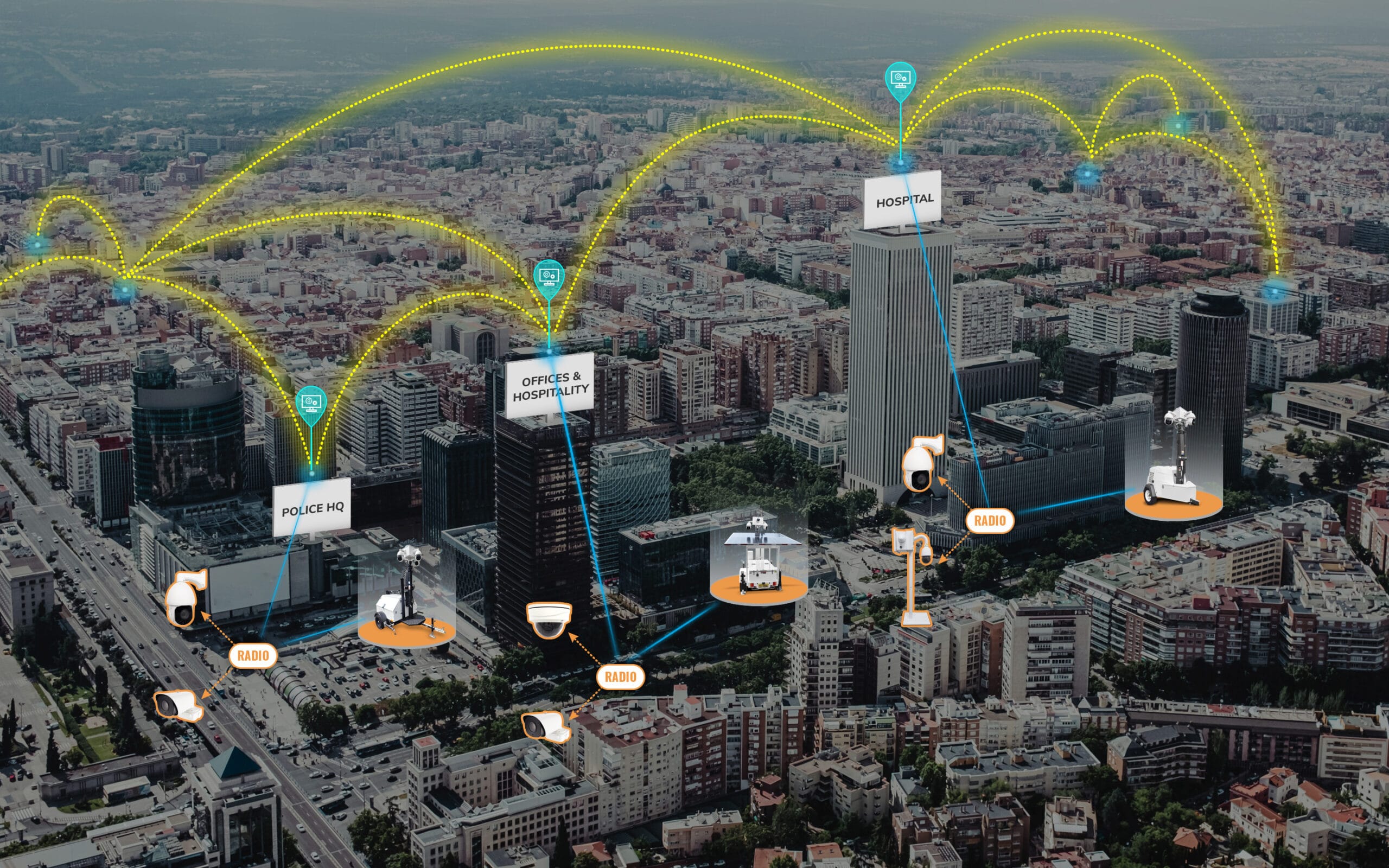
Modern public safety operations increasingly depend on connected technologies that allow agencies to collect, transmit, manage, and act on information in real time.
Depending on the project’s purpose and applicable JAG requirements, agencies may want to evaluate technology initiatives involving:
- Video surveillance and situational awareness
- Mobile and rapidly deployable surveillance systems
- Public safety camera systems
- Video management systems
- Public safety networking and communications infrastructure
- Technology supporting command centers and real-time operations
- Integration of cameras, sensors, networks, and other public safety systems
The important point for agencies considering JAG funding is to start with the operational requirement rather than the equipment.
Start With the Operational Need
Rather than beginning with a list of products, agencies should first identify the public safety problem they are trying to solve.
For example:
- How can we detect unauthorized drones operating near a sensitive public facility?
- How can we improve situational awareness during a major public event?
- How can we rapidly establish video coverage at a location where permanent infrastructure is unavailable?
- How can officers or command personnel access real-time information from cameras and other field-deployed systems?
- How can we improve connectivity between cameras, mobile assets, command locations, and existing public safety systems?
Once the operational requirement is defined, the agency can evaluate the technology, infrastructure, integration, training, and other resources necessary to address it.
This approach can also help create a more clearly defined project scope and budget.
Potential Use Cases for Local Agencies
CRITICAL INFRASTRUCTURE
Agencies responsible for protecting utilities, transportation facilities, government properties, and other critical infrastructure may want to evaluate technologies that improve their ability to detect, monitor, and respond to emerging threats.
Drone detection and video surveillance may form part of a broader situational-awareness strategy around these locations.
MASS GATHERINGS AND SPECIAL EVENTS
Festivals, sporting events, parades, demonstrations, and other large gatherings can create temporary surveillance and situational-awareness requirements.
Mobile surveillance systems can allow agencies to establish additional coverage without requiring permanent infrastructure at every location.
PUBLIC AND GOVERNMENT FACILITIES
Municipal complexes, emergency operations centers, public works facilities, transportation hubs, and other public properties may present opportunities for improved video coverage, drone awareness, networking, and real-time monitoring.
TEMPORARY OR EMERGING PROBLEM AREAS
Agencies may also need additional surveillance at locations where an issue is temporary, changing, or does not justify permanent infrastructure.
Rapidly deployable systems give agencies the flexibility to move technology as operational requirements change.
Build on Existing Public Safety Technology
A JAG technology project does not necessarily need to involve replacing an agency’s existing systems.
In many cases, the operational need may involve closing a specific capability gap or connecting technologies that already exist.
An agency might determine, for example, that it already has cameras but needs improved public safety networking. Another may have fixed surveillance coverage but need a rapidly deployable capability for temporary events. Another may want to bring video, mobile assets, sensors, and other information together to improve situational awareness.
Evaluating the existing environment before defining the project can help agencies identify where an investment may provide the greatest operational benefit.
Start With Your Jurisdiction’s FY2026 Allocation
Before developing a project around Local JAG funding, agencies should determine whether their jurisdiction has received a direct FY2026 allocation.
BJA has published the FY2026 JAG Local Allocations by state.
Because Local JAG is formula-based, an agency should not assume that the full nationwide program amount is available through a competitive application. Direct local eligibility and award amounts are determined through the JAG allocation process.
Jurisdictions without a direct Local JAG allocation may also want to investigate whether funding opportunities are available through their state or applicable pass-through mechanisms.
Agencies should review the official FY2026 funding opportunity and applicable BJA requirements before determining whether a particular expenditure or technology project is eligible.
Check Your FY2026 Local JAG AllocationImportant FY2026 Deadlines
Eligible jurisdictions considering FY2026 Local JAG funding should be aware of two important application deadlines:
Grants.gov Deadline: October 9, 2026, at 11:59 p.m. Eastern
JustGrants Application Deadline: October 16, 2026, at 8:59 p.m. Eastern
Technology projects can require coordination among agency leadership, procurement, IT, grant administrators, vendors, and other stakeholders.
With the application period underway, agencies considering a technology project should begin defining operational requirements, reviewing their allocation, and developing the necessary project scope and budget.
View the Official FY2026 Local JAG Funding OpportunityEvaluating an FY2026 JAG Technology Project?
If your agency has received an FY2026 Local JAG allocation, now is the time to determine how that funding can support your operational priorities.
Packetalk works with law enforcement and public safety agencies to develop connected technology solutions for drone detection, mobile surveillance, video surveillance, public safety networking, situational awareness, and other mission-critical applications.
Our approach begins with the operational requirement and then identifies the cameras, mobile platforms, networking, software, sensors, and other technologies needed to create an integrated solution.
Have a project in mind? Talk with Packetalk about your operational requirements and the technology options available to support them.
Funding eligibility and grant approval are determined by the U.S. Department of Justice and other applicable granting authorities. Packetalk does not determine grant eligibility or guarantee funding. Agencies should review the official funding opportunity and consult their grant administrator or appropriate funding authority regarding eligibility.
Official FY2026 JAG Resources
FY2026 Local JAG Funding Opportunity
U.S. Department of Justice, Bureau of Justice Assistance
FY2026 JAG Allocations
Bureau of Justice Assistance
BJA UAS and Counter-UAS Requirements
Bureau of Justice Assistance