PART 2 OF Packetalk Technologies’ Building Public Trust in Law Enforcement Technology series
Deploying public-safety technology with appropriate safeguards is an important first step. But establishing policies and technical controls is only part of building public trust.
Agencies must also be able to demonstrate that technology is being used responsibly.
As connected cameras, automated license plate recognition (ALPR), video analytics and information-sharing systems become more widely used, transparency and accountability are increasingly important considerations for public-safety leaders.
Public trust grows when communities can understand not only what technology does, but how its use is governed.
Transparency Should Begin Before Deployment
Transparency is most effective when it is part of a technology program from the beginning rather than introduced after concerns arise.
Agencies should be prepared to explain why a system is being deployed, what information it collects, who can access that information and what restrictions govern its use.
A useful starting point is four fundamental questions:
- What data is collected?
- Who can access it?
- Why may it be searched or shared?
- How is misuse detected and addressed?
PRO TIP
Transparency is most effective when it is part of a technology program from the beginning rather than introduced after concerns arise.
These questions provide a practical framework for communicating with elected officials, community stakeholders and the public.
Transparency does not necessarily require disclosing sensitive operational details. It means providing meaningful information about a program’s purpose, governance and limitations while respecting legitimate security and investigative requirements.
Access Controls Create Individual Accountability
Restricting system access to authorized personnel is essential, but authorization should have a clear meaning.
Depending on the technology, agencies can establish individual user accounts, role-based permissions, defined sharing relationships and requirements for documenting investigative purposes.
These measures help ensure that access is connected to legitimate responsibilities.
Equally important is maintaining records of system activity.
Searches, information sharing, administrative changes and connections between organizations should be logged sufficiently to support meaningful review.
For connected systems, accountability extends beyond individual users. Agencies should also understand which organizations can access their information and whether those relationships remain appropriate.
Interoperability should improve authorized collaboration without creating unrestricted access.
Auditability Must Lead to Oversight
Activity logs provide visibility, but logging alone does not establish accountability.
Agencies must determine who reviews system activity, how frequently reviews occur and what circumstances require additional investigation.
Effective oversight may include supervisory reviews, periodic audits, examination of unusual access patterns and documented corrective action when violations occur.

For systems that exchange information across jurisdictions, periodic review of sharing arrangements is particularly important.
A connection that was appropriate when established may require reassessment as operational needs, participating organizations or applicable requirements change.
The objective is not simply to record activity. It is to ensure that activity can be examined and that appropriate action can be taken when necessary.
Measure Responsible Use Alongside Public-Safety Results
Public-safety agencies understandably want to demonstrate that technology investments produce meaningful results.
For ALPR programs, those results might include stolen vehicles recovered, missing or endangered persons located or investigations assisted.
But operational outcomes should not be the only measures of success.
Agencies can also evaluate governance through metrics such as access reviews, audit findings, policy violations, complaints, information-sharing activity and corrective actions.
Reporting both operational results and governance performance provides a more complete picture of a technology program.
It helps answer two equally important questions:
 Is the technology producing public-safety value?
Is the organization operating it within the safeguards established for its use?
A responsible program should be prepared to address both.
Accountability Strengthens Public Trust
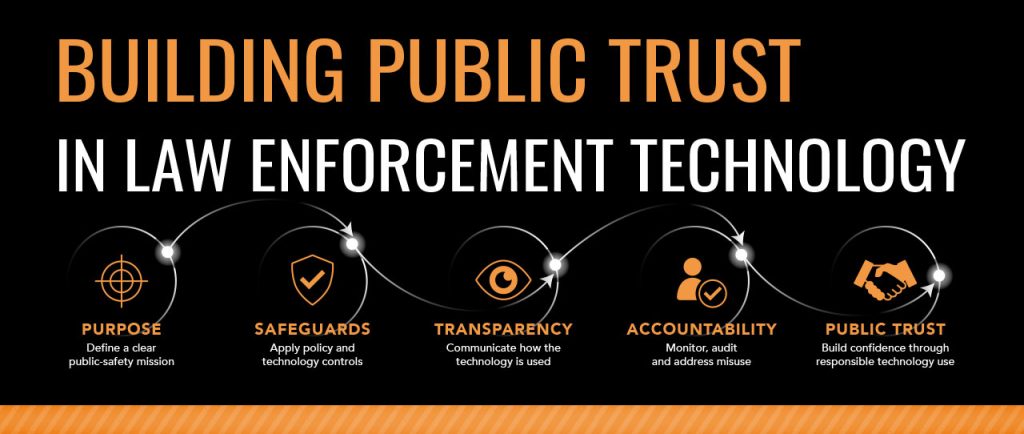
Public trust is not established through technology capabilities or written policies alone.
It develops when agencies can demonstrate that their systems operate within clearly defined limits and that those limits are subject to meaningful oversight.
Transparency helps communities understand how technology is intended to operate.
Access controls and auditability help agencies review how it is actually being used.
Accountability connects those measures to responsible decisions and corrective action.
Together, these practices provide a stronger foundation for public confidence in law-enforcement technology.
IN PART 3, we’ll explore how responsible interoperability, vendor accountability and enforceable limits can help agencies maintain control as public-safety systems become more connected.
READ PART 3 READ PART 1About Packetalk Technologies
Packetalk Technologies develops connected public-safety solutions, including connected cameras, intelligent video analytics, public-safety networking, mobile ALPR and rapidly deployable surveillance systems.
Explore Packetalk’s Connected Public Safety Solutions.